The Secret to Restaurant-Style Beef Bulgogi Starts Before the Pan Gets Hot
Sweet, savory, garlicky beef with lightly caramelized edges makes a great reason to book a Korean barbecue dinner. You can also make it at home without installing a tabletop grill. The key is thinly sliced beef, a balanced marinade, and cooking the meat in a properly heated pan without crowding it. Korean Bapsang creator Hyosun Ro’s bulgogi recipe brings those elements together using ingredients such as soy sauce, sesame oil, garlic, sugar, and grated pear.
The name offers a useful introduction: “bul” means fire, while “gogi” means meat. Although other meat variations exist, bulgogi generally refers to marinated, thinly sliced beef. An open flame is one way to cook it, but it is not the only legitimate approach. Ro also describes stovetop preparations, including a softer, saucier version. For the lightly browned, restaurant-style finish featured here, she focuses on a high-heat skillet method rather than simmering the beef in its juices.
Korean cooking teacher Maangchi puts the priorities neatly: “Delicious bulgogi depends on three things: a good cut of beef, a delicious marinade, and the method you use to cook it.” That is reassuringly practical advice. You don’t need a mystery ingredient or a marathon prep session; you just need to give each of those three decisions some attention. Here is how to do that, following Ro’s four-serving recipe while drawing on both cooks’ published guidance.
Start With Thin Beef, Not a Thick Steak
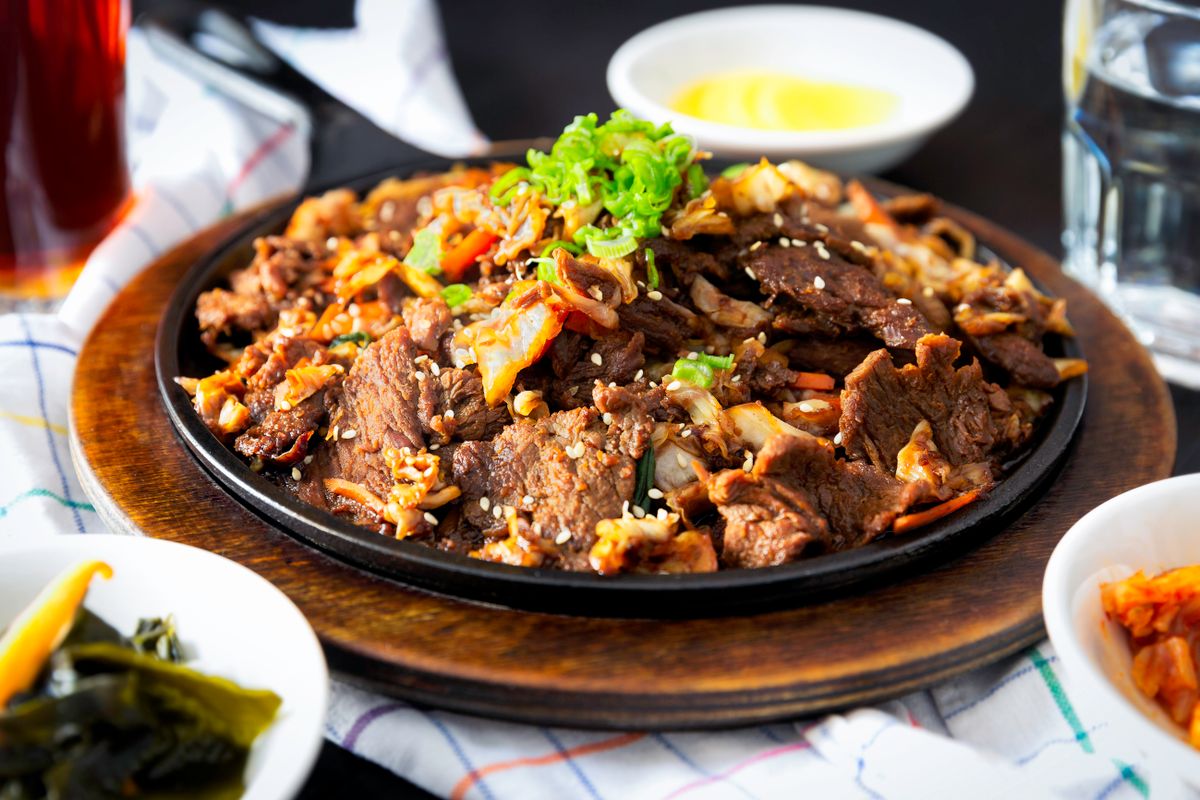
Ro recommends rib-eye as her first choice, but top sirloin, tenderloin, and other tender, flavorful cuts also work. For this recipe, you need two pounds of thinly sliced rib-eye or top sirloin. Korean markets often sell beef already sliced for bulgogi, which removes a significant preparation step. Separate the pieces before marinating so they can be coated individually rather than remaining folded together in a compact stack.
If you are slicing the meat yourself, partially freeze it for about an hour to firm it up, as Ro advises in her recipe notes. Then cut across the grain into slices approximately one-eighth of an inch thick. Maangchi also emphasizes cutting thinly against the grain to make the meat easier to chew. This is not the moment for chunky steak strips: the thin slices are an important part of the dish’s texture.
Prepare the vegetables before reaching for the marinade bowl. Ro’s recipe calls for three scallions cut into two-inch pieces, one small onion thinly sliced, and an optional small carrot, also thinly sliced. These go into the marinade with the beef rather than becoming a separate side dish. Keeping the preparation organized also means that once the meat has finished marinating, you can concentrate on cooking instead of stopping to chop an onion.
Related: 13 Weird Old-Fashioned Foods Only Boomers Eat
Build a Sweet-and-Savory Marinade That Knows Its Limits
The point of the marinade is balance, not maximum sweetness. “The important thing is to find the right balance between saltiness and sweetness,” Ro writes. Her recipe uses six tablespoons soy sauce, three tablespoons water, four tablespoons sugar, and two tablespoons rice wine or mirin. If you prefer less sweetness, she specifies reducing the sugar to three tablespoons. Those quantities are for the full two pounds of beef, so keep the meat-to-marinade ratio intact.
Add two tablespoons minced garlic, two tablespoons sesame oil, two teaspoons sesame seeds, one-eighth teaspoon black pepper, and half a Korean or Asian pear, grated or blended. Whisk everything together in a bowl. Ro also offers a sweetener variation using two tablespoons sugar and two tablespoons honey instead of the four tablespoons sugar. Choose one version rather than adding the honey on top; the objective is a measured marinade, not a sweeter-is-better competition.
The pear contributes flavor and helps tenderize the meat, but finding one does not have to derail dinner. Ro permits a Bosc pear or a sweet apple as an alternative and says the fruit can also be omitted. She warns against casually substituting generous amounts of kiwi or pineapple because their strong tenderizing action can break down the beef too much. Thinly sliced, good-quality meat does not need aggressive treatment to become enjoyable.
Place the beef and prepared vegetables in a large bowl, pour in the marinade, and toss gently until everything is coated. Refrigerate while it marinates for 30 minutes to an hour; Ro also allows an overnight marinade.Maangchi likewise recommends at least 30 minutes in the refrigerator. That flexibility makes the dish manageable whether you are preparing dinner the same evening or getting the beef ready ahead of time.
Give the Beef Room to Brown, Then Bring Out the Rice
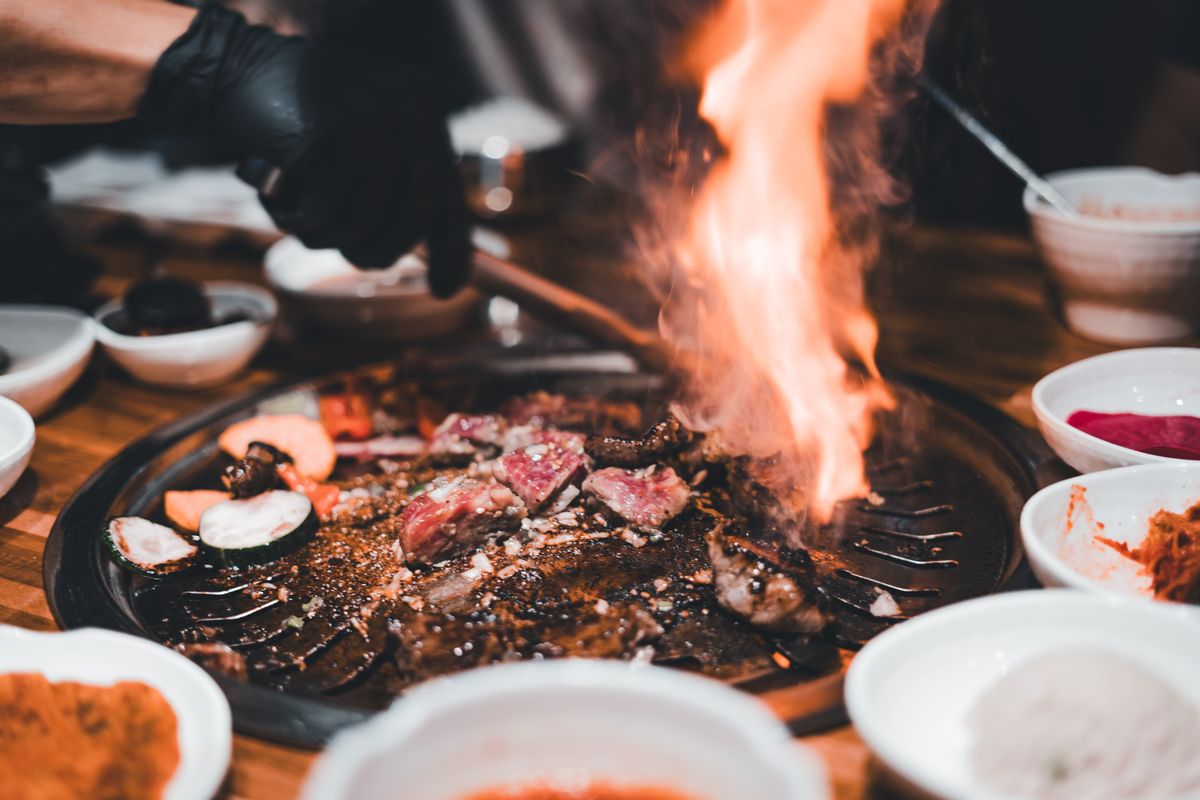
For caramelized skillet bulgogi, heat the pan thoroughly before adding the meat and cook over high heat. Ro’s most useful instruction is also one of the simplest: “Do not crowd the skillet.” Cook in batches as needed rather than tipping the entire bowl into a small pan. Her method calls for cooking until the beef is slightly caramelized; it does not prescribe one universal per-side timing for every pan, burner, and slice thickness.
There is an important distinction here: saucy bulgogi is not failed bulgogi. Ro separately describes cooking the meat in its own juices for a softer result and serving Seoul-style bulgogi with broth, vegetables, and noodles. But if browned edges are your goal, crowding the pan works against that particular finish. Choose the method that matches the dish you want rather than expecting a liquid-filled skillet to behave like a hot, uncrowded cooking surface.
Bring the cooked beef to the table with rice, lettuce, and ssamjang, the Korean dipping sauce commonly served with wraps. Ro recommends scallion salad as an accompaniment, while Maangchi suggests kimchi and other banchan, or Korean side dishes. For a lettuce wrap, Maangchi adds meat, ssamjang, and a garlic clove to a leaf before wrapping it into a bite. It is an inviting way to serve dinner without turning the plate into a complicated project.
If cooked beef remains, Ro suggests using it in bibimbap, gimbap, rice bowls, or even tacos. For the first serving, though, there is little reason to distract from what you have just made: thin beef, a balanced sweet-and-savory coating, and the browned finish you took the trouble to achieve. Put the rice and accompaniments within reach, and let everyone build their own plate, or their next lettuce wrap.