More than 100 Venezuelans deported from the U.S. are missing after deadly Venezuela earthquakes
More than 100 Venezuelans who had just been deported from the United States are missing after two powerful earthquakes struck Venezuela, turning what was supposed to be a return-processing stop into a desperate search for survivors beneath collapsed concrete.
The deportees had arrived from Miami on June 24, only hours before the quakes hit. Their flight carried 146 Venezuelans, including 19 women and 7 children, and the group was taken to a hotel in La Guaira, a coastal state that became one of the hardest-hit areas in the disaster.
By the time the shaking stopped, survivors said the building had collapsed, communications had failed, and families in Venezuela and the United States were left trying to determine who escaped, who was injured, and who remained buried.
A deportation flight arrived hours before the disaster
The timing is what makes this tragedy so haunting. The passengers were not tourists, hotel guests, or residents who chose to be there.
They were deportees, transferred from U.S. custody to Venezuela and moved into a hotel where they were expected to undergo medical checks, receive identity documents, and continue home the next day.
Instead, the hotel became part of the earthquake disaster zone.
The flight from Miami was tracked by ICE Flight Monitor, a Human Rights First initiative that documents U.S. immigration enforcement flights. The group has reported a sharp rise in removal flights under the Trump administration, with flights to Venezuela having resumed after a long pause.
For families, the official process now matters less than the immediate human question: where are the missing passengers?
La Guaira became the center of a nightmare
La Guaira sits along Venezuela’s Caribbean coast, near the main airport serving Caracas. It is also a place where steep terrain, dense construction, and vulnerable infrastructure can turn a major earthquake into a mass-casualty event.
The June 24 earthquakes measured 7.2 and 7.5 in magnitude and struck close together, sending shockwaves through northern Venezuela.
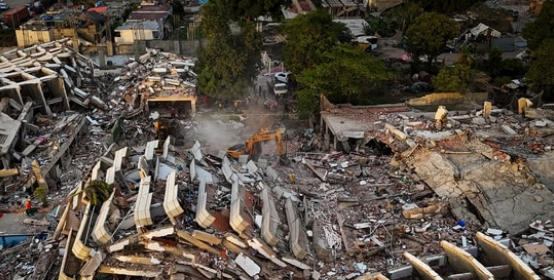
Buildings collapsed, power and communications were disrupted, and rescue crews struggled to reach people trapped under rubble.
Early reports described widespread damage in La Guaira and Caracas, with the disaster quickly becoming one of Venezuela’s worst emergencies in years.
The Venezuelan government has placed the death toll at more than 1,700, while health officials and rescue teams continue to deal with thousands of injuries, damaged medical facilities, and overwhelmed hospitals.
Survivors describe escaping rubble with no communication
One survivor, 58-year-old Lisbeth Portillo, said she had been staying in a second-floor room with other women when the shaking began. She had crossed the U.S.-Mexico border in 2021 and said she still had a pending asylum claim before being deported.
After the building came down, Portillo said she escaped with about 20 other deportees. Bruised and shaken, they walked several kilometers through devastated streets looking for help. With phone service down, she could not immediately reach her children. She eventually found a way to call her husband in the United States and tell him she was alive.
Her story gives the disaster a face, but it also raises a deeper concern. If roughly 20 people escaped and the flight carried 146 passengers, families are left staring at a terrifying gap.
Families are searching for names, not numbers
The missing are not just part of an immigration statistic. They are parents, partners, children, siblings, and relatives whose families are now trapped between two bureaucracies and one disaster zone.
Some relatives have said they received only confirmation that their loved ones were deported. That answer does not tell them whether the person reached the hotel, survived the collapse, was taken to a hospital, escaped without documents, or remains under rubble.
This is the cruelest part of the story. Deportation already separates families across borders. The earthquake added a second layer of separation, one created by collapsed buildings, broken phone lines, overwhelmed hospitals, and unclear government lists.
Across Venezuela, families have turned to online registries, social media posts, and citizen-led searches to locate missing loved ones after the quakes.
Thousands of people have been reported missing nationwide, making the search for the deportees part of a much larger national emergency.
The disaster exposes a dangerous gap in deportation accountability
This tragedy raises a hard question that will not disappear when the rubble is cleared: what duty exists after deportees leave U.S. soil?
From a legal standpoint, deportation may end once a person is transferred out of U.S. custody. From a human standpoint, the chain of responsibility feels more complicated.
These people were placed on a flight, delivered to another government, and moved as a group to a specific site. Hours later, many of them vanished in a disaster.
We now face a situation in which families need passenger manifests, hotel occupancy lists, hospital and morgue records, survivor rosters, and clear communication from both governments.
Without that, the missing remain suspended between categories: deported, unaccounted for, possibly injured, possibly dead.
U.S. Immigration and Customs Enforcement had not immediately provided information when the missing deportees were first reported.
Venezuela’s rescue effort is racing against time
Search-and-rescue operations after major earthquakes are always a race against the clock. Survivors can remain trapped in voids beneath concrete, but every passing day makes rescue more difficult, especially when heavy equipment is limited and aftershocks threaten unstable buildings.
Reports from La Guaira describe volunteers and rescue teams digging through rubble while residents plead for machinery and faster coordination.
The health system is also under pressure, with hospitals facing overcrowding, damaged facilities, and rising fears of disease among displaced people.
For the deportees’ families, each delay is unbearable. They are not simply waiting for news. They are waiting for proof of life.
The deportation policy meets a natural disaster
The case lands at the intersection of two powerful forces: U.S. deportation policy and Venezuela’s earthquake emergency.
The Trump administration has expanded deportation operations, and ICE Flight Monitor tracked hundreds of removal flights to dozens of countries in recent months. Venezuela was among the destinations receiving regular deportation flights.
That policy debate is now no longer abstract for the families of the missing. It has moved from courtrooms, campaign speeches, and immigration offices into the ruins of a hotel.
This does not mean anyone caused the earthquake. But it does mean the deportation system placed a vulnerable group in a specific location at a catastrophic moment. That fact will likely intensify demands for transparency, passenger tracking, and post-deportation emergency protocols.
The human cost is bigger than politics
It is easy for immigration stories to become political shorthand. “Deportees.” “Migrants.” “Asylum seekers.” “Returnees.” Those labels often flatten people into policy categories.
But the survivors’ accounts cut through that language. A woman trapped under debris, reaching for another passenger’s clothing to beg for help. A mother walking through ruined streets with no phone service. A husband in the United States hears that his wife somehow made it out alive. A partner calling detention centers and receiving no real answer.
That is the story beneath the headline.
We are not just looking at a missing persons count. We are looking at families forced to search for loved ones across borders, in the middle of a disaster, after a government flight placed them in harm’s way by timing and circumstance.
A tragedy measured in silence
The most painful part of this disaster is the silence around the missing.
For survivors, the sound of the earthquakes has been replaced by the sound of unanswered calls.
For families, the search has become a daily ritual of names, photos, rumors, hospitals, and hope. For governments, the pressure is now clear: every missing person from that flight must be accounted for.
The deportees boarded a plane expecting uncertainty. They landed in a country already weighed down by years of political and economic strain. Hours later, the ground itself gave way.
Now, more than 100 people are missing, and the central question is painfully simple. Where are they?