New ICE Facility in Louisiana Could Fast-Track Deportations for Families and Children
A planned 528-bed ICE holding facility in Alexandria, Louisiana, is becoming one of the most closely watched immigration developments in the country because it sits at the intersection of three explosive issues: family deportations, unaccompanied migrant children, and private-prison contracting.
The Trump administration says the site will function as a short-term staging area for migrant families and children awaiting removal flights.
Critics see something far more serious: a new deportation pipeline built beside one of the busiest immigration flight hubs in the United States.
The facility is expected near Alexandria International Airport, roughly 175 miles northwest of New Orleans. Its location is the point.
Federal immigration officials have long faced logistical delays when children and families are spread across shelters, foster placements, or holding locations far from departure airports.
By placing a large holding site beside a deportation flight hub, the government can gather people in one location, complete final travel steps, and move them onto aircraft faster.
What We Know About the Alexandria ICE Holding Facility
The Alexandria site is designed for migrant families and unaccompanied children, with records describing it as a short-term center where people may stay for around 72 hours before deportation.
ICE has called it a “staging area,” not a traditional detention center, and planning records reportedly instruct contractors to avoid language such as “prisoners,” “detainees,” or “inmates.”
That wording matters because immigration detention is not only a physical system but also a legal and political system shaped by labels. A “staging area” sounds temporary, administrative, and narrow. A detention center sounds restrictive, punitive, and legally sensitive.
For families with children, that distinction could shape public perception, oversight demands, and legal challenges.
The administration’s argument is direct: families leaving the United States need a centralized location near the airport so that removal can proceed quickly and with fewer transportation complications.
Local officials have described the project as a humanitarian effort tied to families who are voluntarily leaving. Immigration advocates argue the word “voluntary” can be misleading when families may be facing pressure, fear, confusion, or limited access to legal advice.
Why Alexandria International Airport Matters
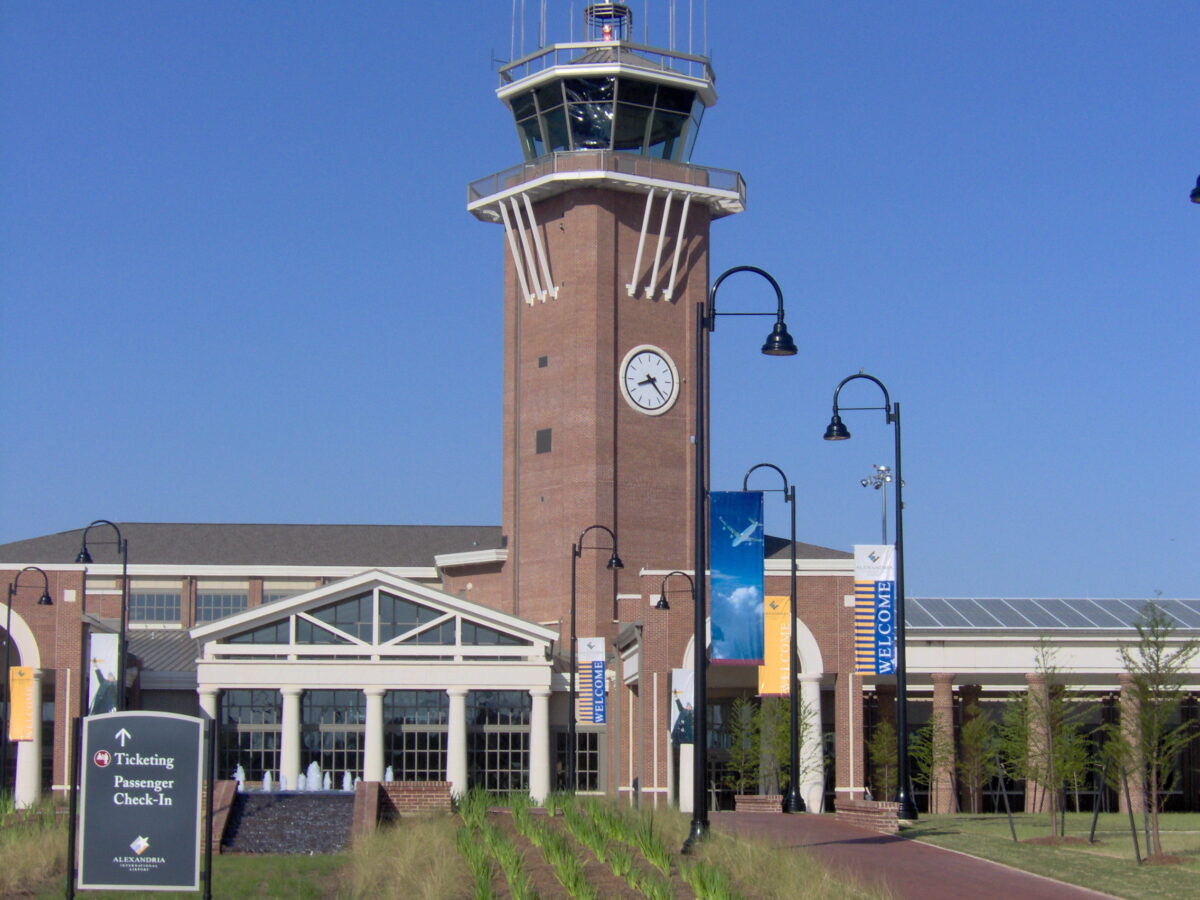
Alexandria is not just another Louisiana city in this story. It is already deeply tied to the nation’s deportation infrastructure.
Data from the ICE Flight Monitor, a Human Rights First initiative that tracks immigration enforcement flights, shows that more than 4,400 immigration enforcement flights moved into and out of Alexandria International Airport in 2025.
That makes the facility’s location strategically powerful. We are not looking at a holding center placed randomly near available land. We are looking at a facility located beside an airport that is already central to deportation operations.
In practice, that could shorten the time between final custody, transportation, and removal. For the government, this may solve a logistical problem. For advocates, it creates a due-process alarm.
When the distance between custody and the aircraft becomes very short, families may have less time to contact lawyers, challenge removal, seek emergency court intervention, or understand what is happening before they are moved.
The Legal Tension Around Unaccompanied Children
The most sensitive part of the plan involves unaccompanied migrant children. Under federal law, children who arrive in the United States without a parent or legal guardian are generally supposed to be released from immigration enforcement custody and placed in the care of the Office of Refugee Resettlement (ORR).
ORR operates under the Department of Health and Human Services and is responsible for child-focused shelter, care, and release planning.
Federal law says that, except in exceptional circumstances, an unaccompanied child must be transferred to HHS custody no later than 72 hours after the government determines the child is unaccompanied.
That is why the Alexandria plan is drawing scrutiny. If children are held by ICE near a deportation airport, even briefly, advocates want to know who controls their release, who guarantees access to legal information, who monitors conditions, and whether child-welfare standards will be fully protected.
ORR’s mission is centered on the health, stability, and well-being of children and other eligible populations, while ICE’s mission is enforcement.
Private Prison Contractor Role Raises More Questions
The facility is expected to be operated by the nonprofit arm of LaSalle Corrections, a Louisiana-based private prison contractor with a footprint across the South’s detention and correctional systems.
The official contractor would be the LaSalle Family Foundation, while LaSalle Corrections would remain involved in operations and compliance.
That arrangement has intensified criticism because LaSalle-run facilities have faced serious scrutiny.
A Department of Homeland Security Office of Inspector General inspection of Winn Correctional Center found violations involving environmental health and safety, food service, use of force, medical care, and related standards.
The concern is not abstract. Winn Correctional Center, a LaSalle-run ICE facility in Louisiana, reported two detainee deaths within two months in 2026, adding to pressure on federal officials to explain whether oversight at contractor-run immigration facilities is strong enough.
Why Advocates Fear “72 Hours” Could Stretch Longer
The government’s stated short-term timeline may sound limited, but immigrant-rights advocates warn that temporary facilities can become longer-term holding sites when court delays, paperwork problems, medical issues, flight cancellations, nationality verification, or legal challenges intervene.
That fear is rooted in past immigration detention patterns. Facilities described as temporary have sometimes held people far longer than expected, especially when agencies face operational pressure or limited alternatives.
For children, even a short period in a restrictive setting can create trauma, confusion, and fear, especially if they do not understand where they are going or whether they will see relatives again.
The central question is simple: who verifies the 72-hour promise? If the facility is not treated like a detention center, oversight may become less visible.
If families and children are legally in ICE custody, advocates argue the government must provide clear standards, transparent reporting, legal access, medical care, language support, and child-welfare protections.
What This Means for Families Facing Deportation
For families, the Alexandria facility could change the final stage of removal. Instead of being moved from scattered shelters, foster placements, or regional detention locations into complicated travel chains, they could be concentrated near the aircraft.
That may make removals faster and more efficient for the government. But speed can carry a human cost.
Families may be making decisions under stress. Parents may not understand whether they still have legal options. Children may not know why they are being moved. Lawyers may not receive timely notice. Courts may have only hours to respond.
In immigration law, timing can determine everything. A few hours can mean the difference between filing an emergency motion and being placed on a plane.
What We Should Watch Next
The biggest questions now are not theoretical. They are concrete. Who will inspect the facility? Will children have lawyers before removal? Will ORR have any operational role? How long will families actually stay? Will medical and mental-health staff be present? Will the government publicly report the number of children held there, their length of stay, and the countries they are sent to?
Until those answers are clear, the Alexandria ICE facility will remain more than a local Louisiana project.
It will stand as a symbol of a harder, faster, and more centralized deportation system, one built not just to hold people, but to move them out of the country with fewer delays.