Your Blazer Isn’t Just for Work. Here’s How to Make It Your Best Weekend Layer
The blazer deserves a better social life than back-to-back meetings. Put it over a T-shirt, pair it with jeans, and suddenly that familiar work jacket has somewhere more interesting to go. The appeal is the contrast: a little structure against relaxed clothes. Vogue’s styling coverage shows just how comfortably blazers sit alongside everyday pieces, including leggings, denim and favorite tees. You do not need matching trousers, or a calendar invitation, to make one useful.
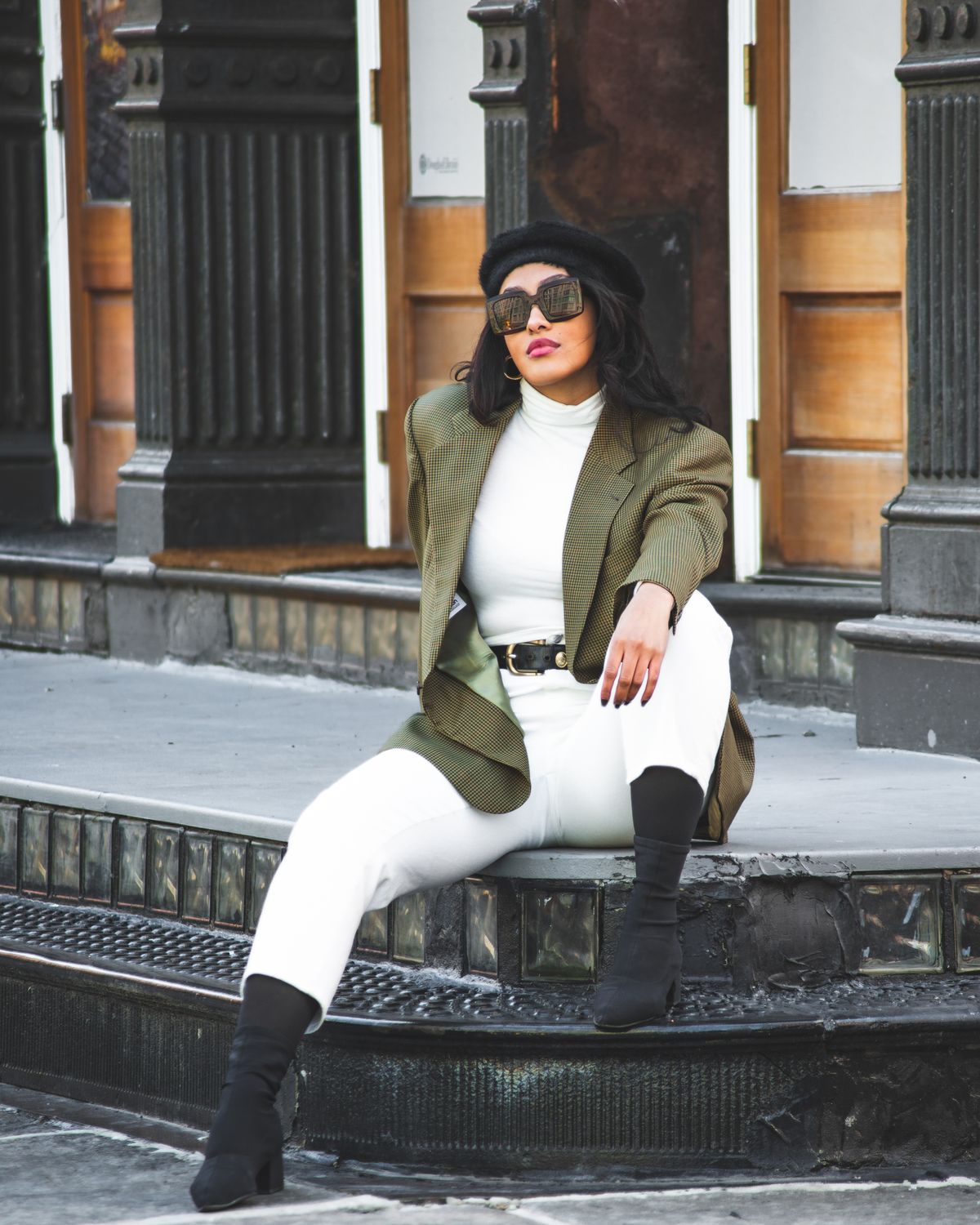
The trick is separating a good fit from a formal outfit. A blazer can sit neatly through the shoulders without demanding a button-down shirt underneath, and an oversized version can look deliberate rather than accidental. What matters is choosing a silhouette you enjoy, making sure you can move comfortably, and building an outfit around it. Think less “office uniform with different shoes” and more “the jacket that gives my usual clothes a little extra intention.”
A Good Fit Shouldn’t Feel Like a Negotiation
Before debating navy versus camel or single-breasted versus double-breasted, try the jacket on and move around. In his fit guide for The Manual, menswear editor Mark D. McKee emphasizes a smooth collar, flat lapels, and enough room through the armholes to move comfortably. For a traditionally fitted blazer, the shoulders should align with the tops of the arms rather than look pinched or excessively wide. The fabric across the back should fall smoothly, not pull or bunch.
Those checkpoints are more helpful than treating a size label as the final verdict. Look at the jacket from behind, not just straight on, and notice whether the rear vents lie flat. McKee identifies vents that gape or strain as a sign of tightness. His sleeve recommendation for a conventional blazer is just above the wrist bone, with enough space through the upper arm. These are guidelines for classic tailoring, not a ban on deliberately long sleeves or exaggerated shoulders.
Most importantly, a blazer should accommodate ordinary life. McKee puts it plainly: “You shouldn’t need to complete a CrossFit in a blazer, but you also shouldn’t feel like you’ll tear something if you reach for a book on a shelf or bend over to pet the dog.” That is a useful dressing-room standard. Try it over the kind of top you actually plan to wear, then sit, bend your arms and reach forward before deciding it belongs in your closet.
Do not confuse “well-fitted” with “as tight as possible,” either. A close-cut jacket and a roomy blazer offer different looks, and neither automatically wins. Celebrity stylist Karla Welch, discussing baggy denim with Vogue, rejected the idea that everything needs an opposing silhouette: “You can do it two ways, fitted on top or all oversized. They both work.” Her point leaves welcome room for preference. You can enjoy definition, volume, or a combination without treating your body as a styling problem.
Let Jeans Do the Dressing Down
Jeans are a straightforward starting point because the mood difference is already built in. Celebrity stylist Jason Bolden explained his approach to Vogue: “I like to style baggy jeans with super-classic things on top, from turtlenecks to proper blazers, like how I styled Demi Singleton in all Celine.” The useful takeaway is not the designer label. It is the pairing of familiar, tailored pieces with relaxed denim, allowing the jacket to sharpen the outfit without turning it into a suit.
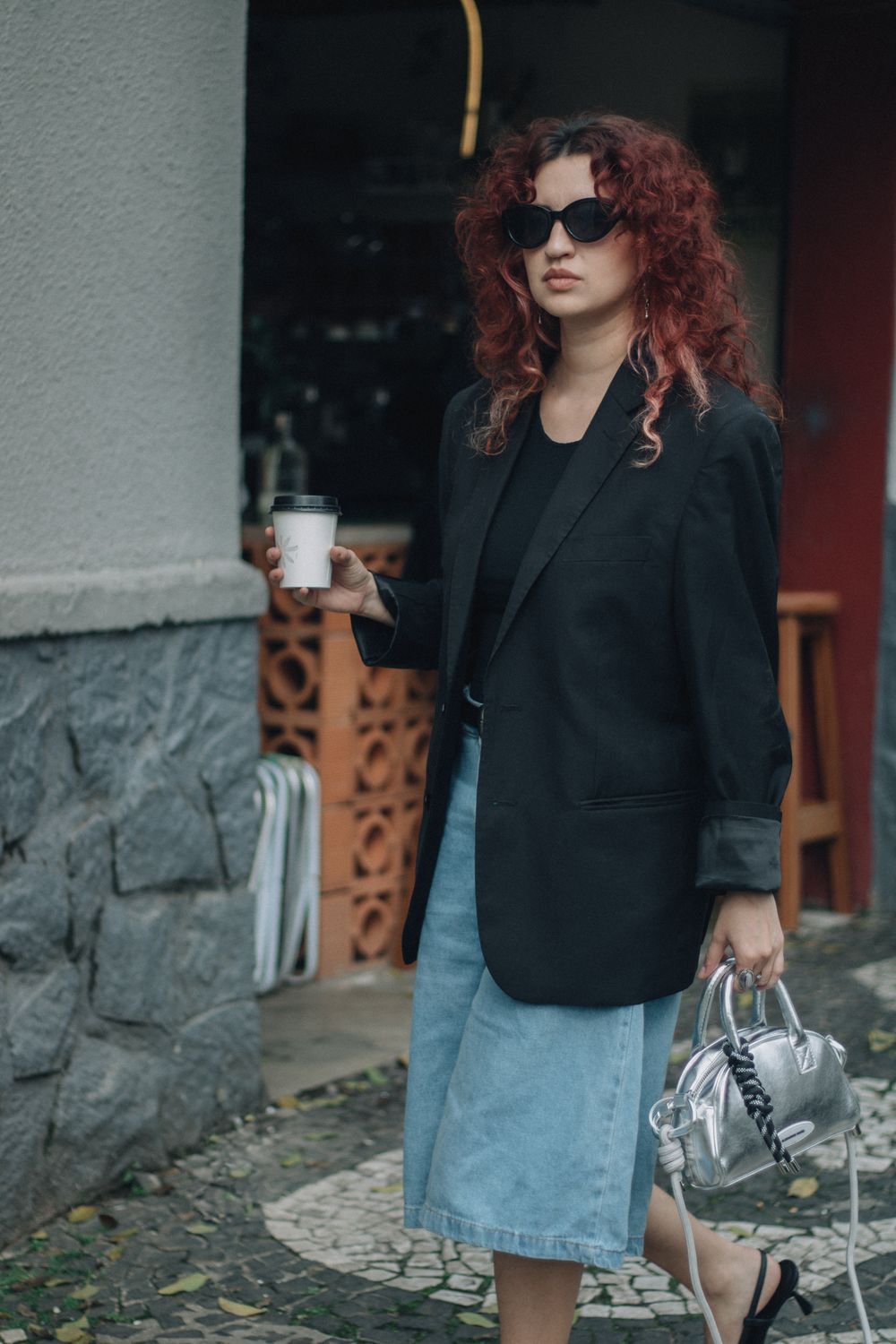
For an approachable version, try your blazer with jeans you already like and a plain T-shirt. Keep the jacket open if you prefer seeing the outfit underneath, and choose footwear that suits what you are doing that day. Sneakers offer one casual direction; loafers offer another. This is an outfit suggestion, not a dress code. The aim is to make the blazer part of your normal wardrobe, not to assemble an entirely new personality around it.
If you like wider jeans, experiment with the jacket’s length instead of assuming the denim needs replacing. Stylist Thomas Christos Kikis told Vogue, “The key to a baggy jean is pairing it with extreme proportions on top, either an oversized blazer or long coat, or shrunken and cropped.” Elizabeth Stewart offered another option: “I’d style baggy jeans with a sharply tailored jacket that is cropped to show the waist, cinched with a good belt.” These are different stylist perspectives, not competing universal rules.
Use those ideas as a try-on exercise. Put the same jeans and top under a shorter jacket, then a longer one, and compare the overall effect. You may prefer the clear break of a cropped blazer or the easy sweep of a longer style. Neither choice needs an elaborate explanation. The exercise is useful because it changes one element at a time, so you can identify what you genuinely like rather than chasing a photograph piece by piece.
Related: 7 Birth Months That Thrived Long Before Love Came Along (And Secretly Prefer It That Way)
Keep the Polish, Lose the Office Script
Casual blazer dressing does not have to begin and end with denim. In Vogue’s spring styling guide, Alexis Bennett Parker highlighted celebrity stylist Julia von Boehm wearing a blazer with leggings, a pointed-collar blouse, and cap-toe shoes. The same article featured Lisa Aiken combining tailoring with a classic T-shirt and a draped scarf. Both examples show how the surrounding pieces change the jacket’s mood: familiar tailoring can feel relaxed without disappearing beneath a pile of accessories.
Try the principle with what you already have: a favorite tee instead of your usual work blouse, leggings instead of tailored trousers, or a soft scarf instead of another formal finishing touch. You do not need to make every swap at once. Start with the blazer you reach for most easily, make sure it feels comfortable, and let one or two everyday pieces set the tone. The jacket can supply the structure. Your weekend does not have to supply the meeting.