You’ve Been Leaving Eggs on the Counter. The USDA Says That’s a Bigger Problem Than You Think
That carton of eggs may not belong on the kitchen counter for as long as you think. For refrigerated shell eggs sold in U.S. grocery stores, USDA guidance says they should not be left out of the refrigerator for more than two hours.
There is an even shorter limit when temperatures climb. If the temperature is above 90 degrees Fahrenheit, refrigerated eggs should be returned to the refrigerator within one hour.
The reason is not simply that eggs may become less fresh. Temperature changes can cause a cold egg to develop condensation, sometimes called “sweating,” and that moisture can help bacteria move through the shell.
Why Eggs Should Stay Cold
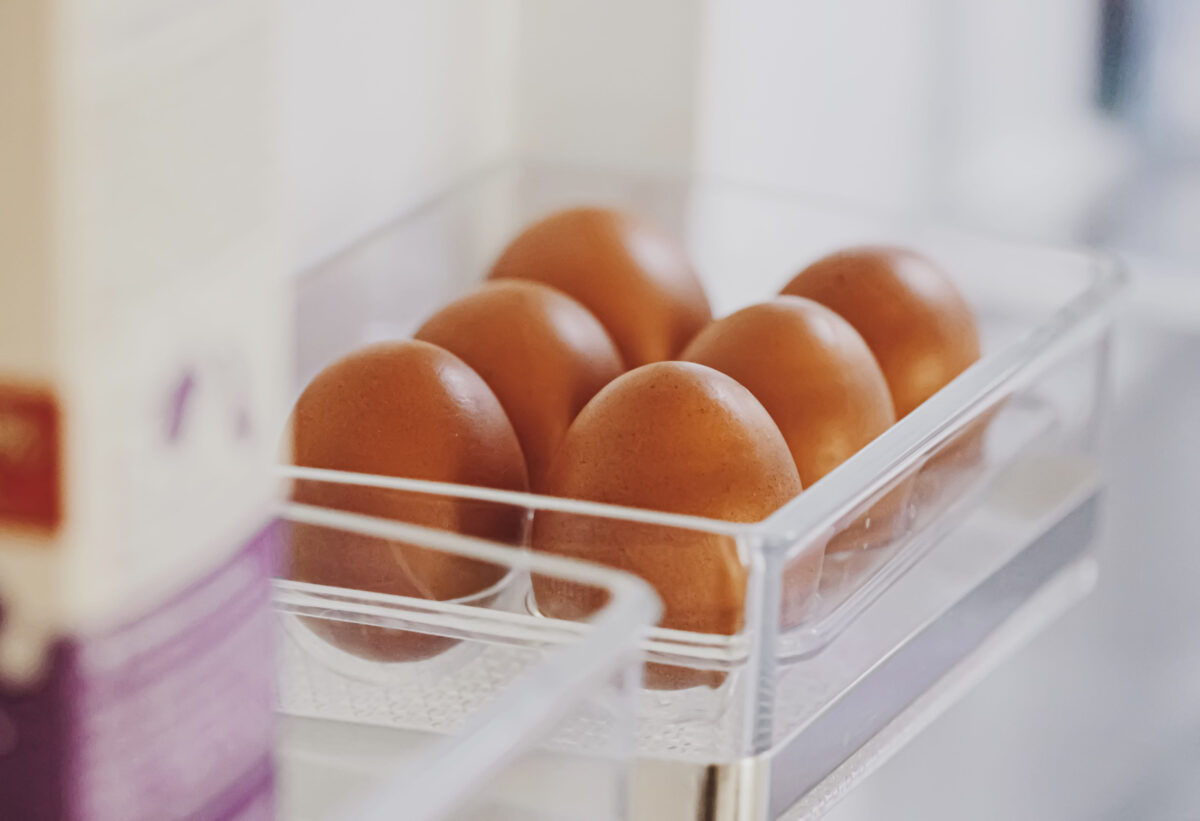
Eggs sold from refrigerated cases in U.S. grocery stores have already been kept cold during distribution and at the store. Once they have been refrigerated, the USDA guidance is to keep them refrigerated rather than repeatedly moving them between cold storage and room temperature.
That makes the kitchen counter, island, or grocery bag a poor place to leave refrigerated eggs for an extended period. A short delay while putting away groceries is different from leaving the carton sitting out for hours.
The two-hour rule is particularly important when a kitchen or other space is warm. When temperatures reach above 90 degrees Fahrenheit, the recommended limit drops to one hour.
Related: 10 Egg-Ceptional Ways to Cook Eggs That Will Change Your Breakfast Game
The Problem With Letting Cold Eggs Warm Up
A cold egg does not simply sit unchanged when it is moved into a warmer environment. As the temperature rises, condensation can form on the shell.
That moisture can create conditions that help bacteria move through the shell. The USDA guidance is therefore based on controlling how long refrigerated eggs remain outside their proper storage temperature.
This does not mean every egg left on the counter will make someone sick. It means that keeping refrigerated eggs at unsafe temperatures can increase the risk, which is why the time limits matter.
The Refrigerator Should Be Set to 40 Degrees
For refrigerated U.S. grocery-store shell eggs, the refrigerator should be set at 40 degrees Fahrenheit or below. Keeping the appliance at that temperature helps maintain the cold storage conditions recommended for these eggs.
Where the eggs sit inside the refrigerator also matters. The USDA guidance recommends keeping them in their original carton and placing that carton in the main refrigerator compartment rather than the door.
The refrigerator door experiences temperature fluctuations as it is opened and closed. Keeping the carton in the main compartment provides a more consistent storage location.
Put The Carton Away After Grocery Shopping
The easiest way to follow the guidance is to make refrigerated eggs one of the groceries that goes into the refrigerator soon after arriving home. There is little benefit to leaving them in a grocery bag or on the counter while other items are being put away.
The same principle applies during cooking. If eggs are sitting out while breakfast or another meal is being prepared, keep track of how long they have been outside the refrigerator.
Once refrigerated eggs have been out for more than two hours, the USDA guidance says to discard them. If temperatures are above 90 degrees Fahrenheit, that limit is one hour.
Don’t Rely On Smell Or Appearance
One common mistake is assuming an egg is fine because it looks normal. Smell and appearance cannot confirm whether an egg has been kept safely after it has spent too much time outside the refrigerator.
The same applies to the familiar float test sometimes used to judge eggs. It does not establish whether an egg is safe after improper storage.
For that reason, the time and temperature guidance matters more than trying to inspect the egg after it has been left out. Once the recommended limit has been exceeded, discarding the eggs is the appropriate step.
Cook Eggs Thoroughly When Required
Storage is only one part of handling refrigerated shell eggs. USDA guidance also recommends cooking eggs until the yolks and whites are firm unless pasteurized eggs are being used in recipes that call for raw or undercooked eggs.
That advice becomes relevant for recipes where eggs are not cooked until firm. If a recipe calls for raw or undercooked eggs, the guidance makes a distinction for pasteurized eggs.
The important point is to follow the appropriate preparation guidance for the type of egg and recipe being used rather than assuming every preparation is treated the same way.
What About Shelf-Stable Egg Products?
The two-hour and one-hour guidance discussed here applies to fresh shell eggs sold refrigerated in U.S. supermarkets. It should not automatically be applied to shelf-stable dried egg products before they are opened.
Those products are different from the refrigerated shell eggs found in typical U.S. grocery-store refrigerated cases. Their storage instructions should be followed according to the product.
It is also important not to assume that egg-storage practices used in another country apply directly to refrigerated U.S. supermarket eggs. Production, washing, refrigeration, and food-safety systems can differ.
The Simple Rule To Remember
For refrigerated shell eggs from a U.S. grocery store, the basic routine is straightforward: keep them cold, keep them in their original carton, and store them in the main part of the refrigerator at 40 degrees Fahrenheit or below.
Do not leave them on the counter for more than two hours. When temperatures are above 90 degrees Fahrenheit, use the one-hour limit instead.
That may seem like a small kitchen habit, but it is an easy one to control. Put the eggs away after bringing them home, keep track of how long they sit out during cooking, and do not rely on smell, appearance, or a float test to judge eggs that have been left out too long.