9 Regional Sandwiches Every American Should Know
America runs on sandwiches. We pack them in lunchboxes, order them at counters, and argue about how they should be made. Yet some of the best ones are almost unknown outside the place where they were born.
Every region has a sandwich it claims as its own. Locals grow up eating it, defend it fiercely, and are shocked to learn that the rest of the country has never heard of it. Travelers who stumble onto one often remember it for years.
These sandwiches tell the story of the immigrants, workers, and cooks who created them. Here are nine regional sandwiches every American should know, and where each one comes from.
1. The Po’ Boy (Louisiana)
The po’ boy is New Orleans on a loaf of bread. It is built on a long piece of French bread with a crisp crust and a soft center. Fillings include fried shrimp, fried oysters, roast beef with gravy, or catfish.
Ordering one “dressed” means it comes with lettuce, tomato, pickles, and mayonnaise. The sandwich is said to date to a 1929 streetcar strike, when a local restaurant fed the striking workers, the “poor boys,” for free. It has been a city treasure ever since.
2. The Philly Cheesesteak (Pennsylvania)
The cheesesteak was created in Philadelphia in the 1930s by a hot dog vendor who decided to grill some beef. Thinly sliced steak is cooked on a flat-top with onions and piled onto a long roll. It is topped with melted cheese, which may be provolone, American, or processed cheese sauce.
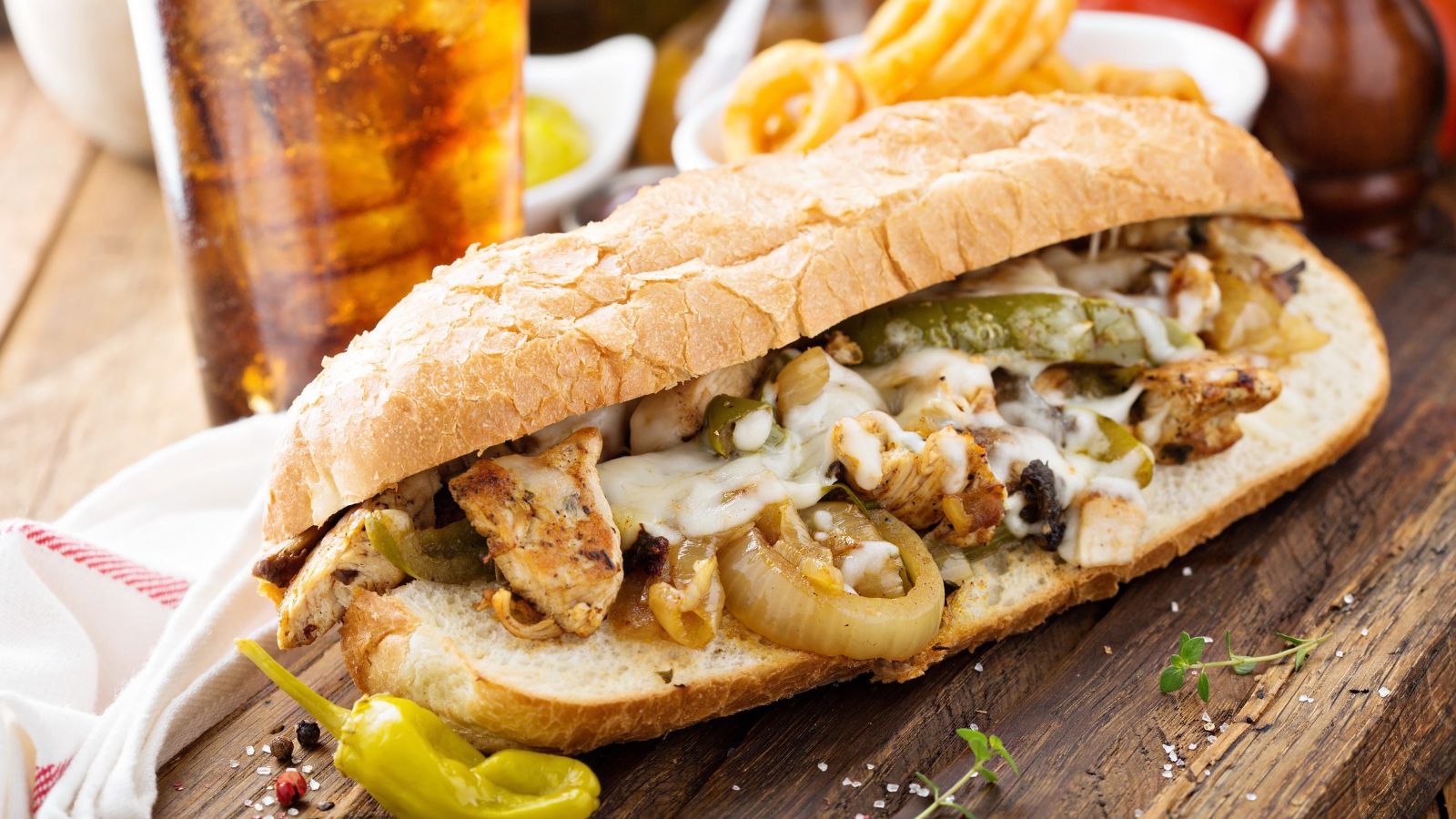
Philadelphians have firm rules about how to order one. Asking for the wrong cheese or toppings can earn a look from the person at the grill. It leads many lists of American foods named after the places they come from.
3. The Lobster Roll (New England)
The lobster roll is summer in New England. Chunks of lobster meat are served in a split-top hot dog bun that has been buttered and toasted on the sides. It is usually eaten at a seaside shack with a bag of potato chips.
There are two rival styles. Maine’s version is served cold with a light coating of mayonnaise, while Connecticut’s is served warm with melted butter. Each state is convinced its way is the only right one.
4. The Muffuletta (Louisiana)
The muffuletta was created by Sicilian immigrants in New Orleans in the early 1900s. It starts with a large, round sesame loaf. Inside are layers of salami, ham, mortadella, and provolone.
What sets it apart is the olive salad, a tangy mix of chopped olives, pickled vegetables, garlic, and oil that soaks into the bread. A whole muffuletta is big enough to feed several people. Most shops sell it by the half or the quarter.
5. The Loose Meat Sandwich (Iowa)
In Iowa, they eat a sandwich that looks like a hamburger that fell apart. Seasoned ground beef is steamed or fried loose and spooned onto a soft bun. It is topped with mustard, pickles, and chopped onion.
It is not a sloppy joe, because there is no tomato sauce. The best-known version comes from the Maid-Rite chain, which began in Iowa in the 1920s, and public radio station WVIK has told the story of its long history in the region. Midwesterners who move away often say it is the food they miss most.
6. The Italian Beef (Illinois)
Chicago’s Italian beef is a gloriously messy sandwich. Thin slices of seasoned roast beef are simmered in their own juices and stuffed into a long Italian roll. It is topped with sweet peppers or hot giardiniera, a spicy pickled vegetable relish.
Customers can order it “dry,” “wet,” or “dipped,” depending on how much gravy they want. A dipped sandwich has the entire roll dunked in the juices. Locals have a special forward-leaning stance for eating it without ruining their shirts.
7. The Cuban Sandwich (Florida)
The Cuban sandwich was created by Cuban immigrant communities in Florida. It layers roast pork, ham, Swiss cheese, pickles, and mustard on Cuban bread. The whole thing is pressed flat on a hot grill until the outside is crisp.
Tampa and Miami have a long-running feud over the recipe. Tampa’s version includes salami, a nod to the city’s Italian immigrants, and Miami’s does not. Each city insists that its sandwich is the real Cuban.
8. The Hot Brown (Kentucky)
The Hot Brown was invented in the 1920s at the Brown Hotel in Louisville. It is an open-faced sandwich of sliced turkey on toast, covered in a creamy cheese sauce. It is topped with bacon and tomato and browned under a broiler.
It was created as a late-night dish for guests who had been dancing for hours. Today it is a Kentucky Derby tradition. It has to be eaten with a knife and fork.
9. The Pork Tenderloin Sandwich (Indiana)
The breaded pork tenderloin is the pride of Indiana and much of the Midwest. A piece of pork is pounded very thin, breaded, and deep-fried until golden. It is served on a regular hamburger bun.
The joke is the size. The meat hangs several inches over every edge of the bun, like a plate with a small hat on it. It comes with pickles, onion, and mustard, and first-time visitors usually laugh when it arrives.
Why Regions Have Their Own Sandwiches
Most of these sandwiches were created by immigrants and working people. Sicilians, Cubans, and Italians brought their own breads, meats, and flavors and adapted them to what they found here. Their food became part of the local identity.
They were also practical. A sandwich was a cheap, filling meal that a dockworker, factory hand, or streetcar driver could eat quickly. Many began as a way to use tough cuts of meat or stretch a small amount of food.
Local ingredients mattered too. New England had lobster, Louisiana had Gulf shrimp and oysters, and the Midwest had pork and beef. Regional breads such as Cuban loaves and New Orleans French bread are hard to reproduce elsewhere.
Why They Stayed Local
Before national chains and interstate highways, food did not travel far. A sandwich could be famous in one city and unknown 200 miles away. That isolation allowed each one to develop its own strict traditions.
Many depend on a specific bread or technique. People who have tried to make a po’ boy without the right loaf know the difference at once. That is why so many of these sandwiches still taste best in their hometowns.
The debates around them are part of the fun. Americans love to argue about food, and state foods have even been fought over in state legislatures. A sandwich can stand for civic pride.
A Delicious Reason to Travel
Trying these sandwiches is a wonderful way to see the country. Each one comes with a neighborhood, a history, and usually a long-running family business. Many are served at classic American diners and lunch counters that have been open for generations.
If you cannot travel, some can be made at home with a little effort. The loose meat sandwich and the Hot Brown are especially easy to try. Which regional sandwich did you grow up with, and which one would you drive across the country to eat?