Mike Pence Says Iran Is Pressuring Trump With a Stark Choice: “Surrender Hormuz to Iranian Terror or Fight for It”
Former Vice President Mike Pence has thrown a sharp new challenge into the middle of President Donald Trump’s Iran crisis, warning that Tehran is forcing Washington into a brutal decision over the Strait of Hormuz: accept Iranian pressure over one of the world’s most important shipping lanes, or confront it directly.
The message was blunt, dramatic, and inseparable from the larger fight now unfolding around the Persian Gulf. Pence argued that Iran is leaving Trump with a choice between “surrender Hormuz to Iranian terror” or fighting to reopen the Strait by force. In one sentence, he captured the growing pressure on Trump from the hawkish wing of his own political world: diplomacy may have slowed the conflict, but it has not yet settled the question of who controls the waterway.
That is why this moment matters. The dispute is not only about one former vice president criticizing one president. It is about American power, Iranian leverage, global energy markets, and the dangerous limits of a ceasefire that appears fragile before the ink has dried.
Why Mike Pence’s Iran Warning Is Bigger Than One Political Statement
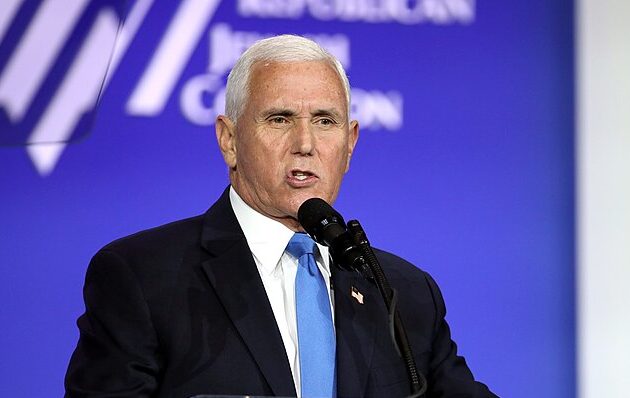
Pence’s warning lands at a volatile time for the Trump administration. The United States and Iran have been attempting to maintain an interim arrangement intended to reduce hostilities and reopen the Strait of Hormuz. Yet the situation on the water has remained tense, with commercial shipping still exposed to risk, Iran asserting authority over routes, and the United States insisting that maritime passage cannot become a bargaining chip controlled by Tehran.
For Pence, the problem is simple: Iran cannot be trusted to control the crisis’s tempo. His message reflects a long-running conservative argument that Tehran uses negotiations not to end confrontation, but to buy time, test American resolve, and extract concessions while keeping pressure on U.S. allies and global markets.
We are now seeing that argument return with force. Pence is no longer Trump’s loyal vice president standing beside him at rallies. He is speaking as a Republican critic of Trump’s foreign policy instincts, especially when those instincts lean toward temporary deals, personal diplomacy, or ceasefire language that leaves too much room for interpretation.
The result is a public split on the right. Trump wants to present himself as the president who can pressure Iran, make a deal, and avoid an endless war. Pence is arguing that Iran is turning that deal into a trap.
The Strait of Hormuz Has Become the Real Battlefield
The Strait of Hormuz is not a symbolic prize. It is one of the most valuable maritime chokepoints on Earth. Oil, liquefied natural gas, commercial vessels, and the economic stability of multiple regions are tied to the narrow passage between Iran and Oman. When traffic through Hormuz slows, the effects can ripple through fuel prices, shipping insurance, Asian energy markets, and inflation fears far beyond the Middle East.
That is why Iran’s conduct in the Strait carries such enormous weight. Tehran understands that Hormuz gives it leverage even when its economy is strained and its military faces pressure. It does not need to defeat the United States outright to create a crisis. It only needs to make the cost of passage uncertain.
That uncertainty is the weapon.
If ship owners fear attacks, if insurers raise costs, if Gulf producers hesitate, and if Asian buyers worry about supply, Iran gains influence without winning a conventional battle. It can create a pressure campaign that forces Washington, Gulf states, and global markets to respond on Tehran’s timetable.
This is the heart of Pence’s warning. He is not merely saying Trump faces a military decision. He is saying Trump faces a test of whether the United States will allow Iran to convert a strategic waterway into a permanent instrument of coercion.
Trump’s Iran Deal Faces Its Hardest Test
Trump has repeatedly framed his approach to Iran as strong, transactional, and results-driven. His argument is that the United States can apply overwhelming pressure, force Tehran toward negotiations, and secure a better outcome than traditional diplomacy.
But the Hormuz crisis exposes the weakness of any agreement that depends on vague wording, competing interpretations, and the goodwill of an adversary that sees ambiguity as opportunity.
If Iran agrees to “best efforts” or “safe passage” but then insists that ships must use its preferred routes, obtain approvals, or avoid alternatives backed by the United States or Oman, the agreement becomes vulnerable. It may exist on paper while failing at sea.
That is the danger now facing Trump. A ceasefire that does not restore freedom of navigation is not a victory. A deal that lowers tensions temporarily while allowing Iran to pressure commercial shipping is not a strategic settlement. It is a pause that may reward the very behavior Washington hoped to stop.
We can see why Pence’s statement is designed to sting. It questions not only Iran’s intentions but Trump’s judgment. It asks whether the president started a confrontation without securing the conditions necessary to finish it.
Iran’s Strategy: Control the Route, Control the Negotiation
Iran’s approach appears focused on one central objective: maintaining influence over how the Strait of Hormuz is reopened and managed. Tehran has resisted arrangements that would weaken its role, especially routes that shift traffic closer to Oman or place more practical authority in the hands of other states or international bodies.
That matters because the route question is really a sovereignty question, a military question, and an economic question wrapped into one. If Iran can dictate where vessels travel, how they move, and under whose understanding they pass, then Iran can claim a form of control even without formally closing the Strait.
This is why the Hormuz dispute is so difficult. The United States wants open passage. Oman wants a workable regional arrangement. Gulf states want security and predictability. Iran wants leverage. Commercial shippers want safety. Energy markets want stability. None of those interests align neatly.
Pence’s critique is built on the belief that Iran will exploit that disorder. In his view, Tehran does not need a final agreement if the interim chaos already gives it bargaining power.
The Political Pressure on Trump Is Growing
Pence’s statement also carries domestic political consequences. Trump’s foreign policy brand has always combined two impulses: avoid long wars and project overwhelming strength. The Hormuz crisis is dangerous because it forces those two instincts into conflict.
If Trump escalates militarily, he risks being pulled deeper into a regional war at a time when many Americans are tired of foreign entanglements. If he avoids escalation, critics like Pence can accuse him of allowing Iran to humiliate the United States and threaten global commerce.
That is a difficult political box.
For Trump’s supporters, strength is central to the argument for his leadership. He cannot easily sell a deal that appears to leave Iran with practical control over the Strait of Hormuz. Yet he also cannot easily sell another round of open-ended military action if Americans see it as another Middle East conflict with uncertain goals.
Pence is pressing directly on that contradiction. His message is aimed not only at Trump, but at Republican voters, foreign policy hawks, Gulf allies, and anyone watching to see whether Washington’s red lines still matter.
Why the Hormuz Fight Could Shape the Next Phase of U.S.–Iran Relations
The immediate question is whether the United States and Iran can stabilize the current ceasefire and prevent another round of strikes. But the deeper question is whether any diplomatic framework can survive if Tehran continues to treat the Strait as a bargaining tool.
If Iran believes Trump will not risk escalation, it may keep testing limits. If Trump believes Iran is trying to embarrass him politically, he may respond more aggressively than negotiators expect. If commercial vessels remain at risk, markets may push the crisis forward even when diplomats want to slow it down.
That is the danger of Hormuz. It is not a quiet border dispute. It is a narrow stretch of water where military signaling, oil prices, national pride, and domestic politics collide.
For the United States, the challenge is to establish a position that is firm enough to deter Iran but disciplined enough to avoid uncontrolled escalation. For Trump, the challenge is even more personal: he must prove that his dealmaking can produce enforceable results, not just dramatic announcements.
Pence Is Framing the Debate in Stark Terms
Pence’s language is deliberately severe. Words like “surrender”, “terror”, and “fight” are not chosen for diplomatic nuance. They are chosen to force a moral and strategic contrast. In Pence’s framing, there is no middle ground where Iran pressures shipping, claims control, and still receives the benefits of negotiation.
That framing will appeal to conservatives who believe the United States has already conceded too much. It will frustrate those who believe another military escalation could set the region on fire. But it will be difficult for the Trump administration to ignore because it captures a real vulnerability in the current arrangement.
If ships cannot move freely, the Strait is not truly open. If Iran can threaten alternate routes, the ceasefire is not fully stable. If Washington responds only after attacks occur, deterrence may already be weakening.
That is the argument Pence is pushing into the national conversation.
What Comes Next for Trump, Iran, and the Strait of Hormuz
The coming days may determine whether the Hormuz crisis becomes a contained diplomatic dispute or a renewed military confrontation. Talks can reduce risk, but only if they produce clarity. Commercial vessels need predictable rules. Gulf states need guarantees. Iran needs to know that attacks and intimidation will carry costs. The United States needs to show that freedom of navigation is not negotiable in practice, not merely in speeches.
Trump’s task is to prove that his Iran strategy has substance beyond pressure and announcement. Pence’s task, politically, is to remind Republican voters that a deal with Iran can become a liability if Tehran appears to benefit from it.
We should view this moment as a test of power, not rhetoric. The Strait of Hormuz is where slogans meet ships, where diplomatic language meets drones, and where political promises meet the hard geography of global energy.
Pence has now put the choice in the sharpest possible terms. Trump can defend the ceasefire as a path to stability, but he must also show that Iran cannot turn Hormuz into a tollgate of fear. If he fails, Pence’s warning will not sound like a provocation. It will sound like a prediction.
The central question is no longer whether Trump can announce a deal. The question is whether he can enforce one.
And in the Strait of Hormuz, enforcement is everything.